Initiate, Develop & Expand business through us

Please wait...
Initiate, Develop & Expand business through us
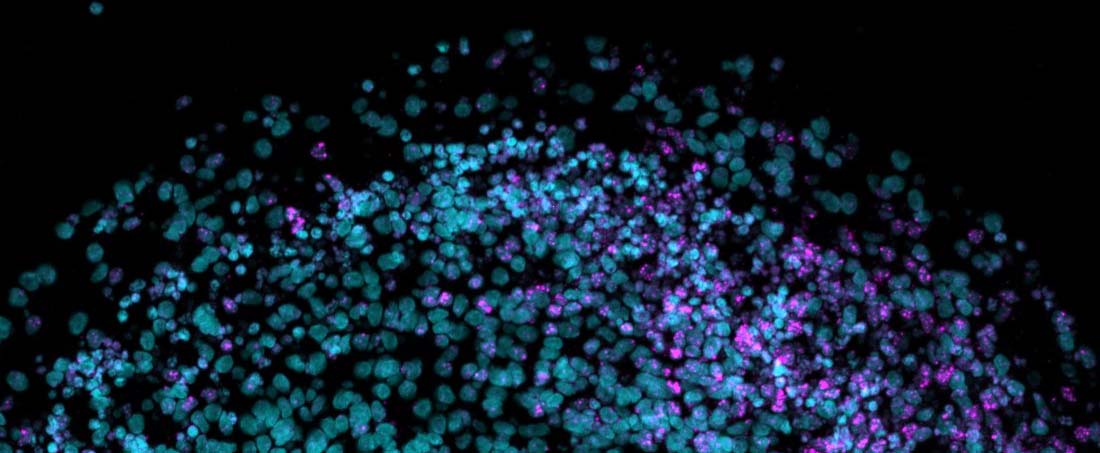
Brain organoids are small, self-assembling, three-dimensional cell cultures that are derived from pluripotent stem cells, which comprise induced pluripotent and embryonic stem cells. The self-organisation ability of the stem cells helps to replicate a complex tissue structure that can mimic, to some degree, the in vivo organs. Brain organoids can capture the cellular and histological levels of the development of the brain. There are myriad applications of brain organoids, as they have an advantage over traditional methods to study the brain. Traditionally, human pathological and post-mortem samples have been used to study the brain and its diseases, but these are insufficient. Various model organisms that are used have limitations, as they have genetic and physiological differences and cannot fully capture the structure and function of the human brain. Two-dimensional animal cell cultures that are widely used are also riddled with limitations and are not capable of capturing the complexity and providing the complex extracellular environment, as they can represent the brain only at a cellular level.
Brain organoids can be used as models to study human neurodevelopment. They have an outer subventricular zone that contains outer radial glial (oRG) progenitor cells, which are thought to play an essential role in the increase in size and complexity of the human cortex through evolution, which are not present in mouse models. Patient-derived stem cells can be used to create organoid models to study neurodevelopmental brain disorders like microcephaly, autism spectrum disorder, ischaemia, etc. Further, using viral vectors to genetically manipulate organoids for studying the mechanism of disease at the molecular level.
Another application of brain organoids is to study human evolution, as it offers a potential for the relative study of the brains of different species. Studying tissue morphogenesis, drug sensitivity and toxicity testing are some of the other applications. They can also be used to study tumourigenesis, initiated by genetically modifying the brain organoid, and can also be used for testing various cancer therapies. A huge prospect presented is the transplantation of in vitro organoids. Bioengineering to integrate biomaterials and microfluidics can be another prospective approach to generating vasculature-like systems in organoids. Fused organoids are another potential strategy to investigate communication between different organs or different parts of the brain. Hence, brain organoids provide a radical approach to studying and modelling brain development, disorders, treatments, etc., along with a plethora of potential future applications.
Keywords: Brain organoids, 3D cell culture, Pluripotent stem cells, Neurodevelopmental disorders, Neural stem cells
Image source:
Image by Nreis1, available under Creative Commons Attribution 4.0 International, at https://commons.wikimedia.org/wiki/File:Human_Brain_Organoid.jpg
Citation:
Smriti Marjara. Applications of brain organoids. The Torch. 2023. 4 (46).
Available from: https://www.styvalley.com/pub/magazines/torch/read/applications-of-brain-organoids/.
Article counter:
The article has been read 157 time(s)