Initiate, Develop & Expand business through us

Please wait...
Initiate, Develop & Expand business through us
It is not an exaggeration to call mosquitoes the deadliest animals in human history, as they have accounted for the death of 52 billion humans over the years. Even in the modern age, almost 700 million people contract a mosquito-borne disease each year. The diseases include, but are not limited to malaria, dengue, chikungunya, yellow fever & Japanese encephalitis. The annual death toll is well over 1 million, with the majority being from malaria. However, there is some hope in sight as researchers across the globe have found an ingenious way to control the population of these pesky insects. This method uses genetic modification to naturally prevent the transmission of mosquito-borne diseases like dengue, malaria, Zika, chikungunya, and yellow fever. It is being done on the Aedes aegypti mosquito population, which is the primary carrier of dengue, malaria, etc. The method is named as Wolbachia-Aedes suppression technology.
Wolbachia is a safe, naturally occurring bacterium found in a large number of insect species. Humans and animals have been exposed to Wolbachia for a very long time. This happens from contact with insects, eating insects, or eating foods such as fruit that are exposed to insects. Despite this, there have been no reports of Wolbachia ever causing disease in humans or other animals. This bacterium does not survive in the environment outside insect hosts, as it dies with the death of the host; there is no chance of persistence in the environment.
To introduce Wolbachia into Aedes aegypti, researchers inject the bacterium into the mosquito’s eggs, which then facilitates the settlement of Wolbachia within the Aedes aegypti mosquito population. Now, the matings between Wolbachia-Aedes males and urban non-Wolbachia-carrying females produce eggs that do not hatch. This is because Wolbachia causes cytoplasmic incompatibility (CI), a phenomenon where eggs and sperm are unable to form viable progeny. On the other hand, females that do carry the bacterium can produce viable eggs after mating with males, whether or not males carry it. Since Wolbachia-carrying mosquitoes can’t transmit diseases, the number of mosquito-borne diseases has reduced or can even be completely eliminated in some areas.
This technology has been successfully deployed in Singapore and has also undergone successful trials in Florida, USA. A full-scale effort to curb these mosquito populations will start soon, as this novel technique has shown immense potential. However, there have also been a few failed trials. Thus, with proper risk management studies and technical control over the test surroundings, we could have a strong defence against disease-causing mosquitoes.
Keywords: Mosquito, Wolbachia, Aedes aegypti, Dengue, Malaria, Cytoplasmic incompatibility
Image source:
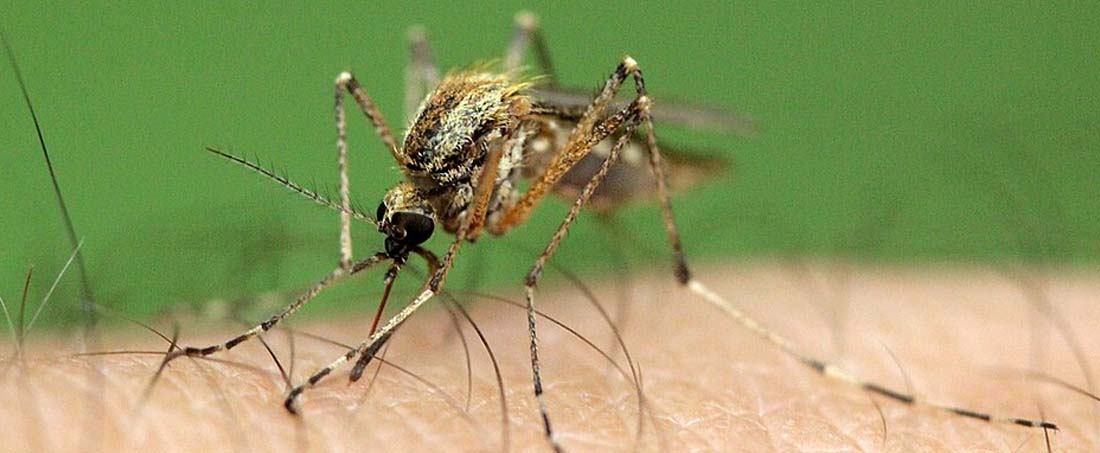
Image by Wilder Thibi, available under Creative Commons Attribution-Share Alike 3.0 Unported, at https://commons.wikimedia.org/wiki/File:Mosquito_on_arm.jpg
Citation:
Dibyam Debasish Sahu. Mosquito suppression with Wolbachia-Aedes technology. The Torch. 2023. 4 (45).
Available from: https://www.styvalley.com/pub/magazines/torch/read/mosquito-suppression-with-wolbachia-aedes-technology/.
Article counter:
The article has been read 148 time(s)